Do Exterior Sprinkler Systems Reduce Wildfire Risk?
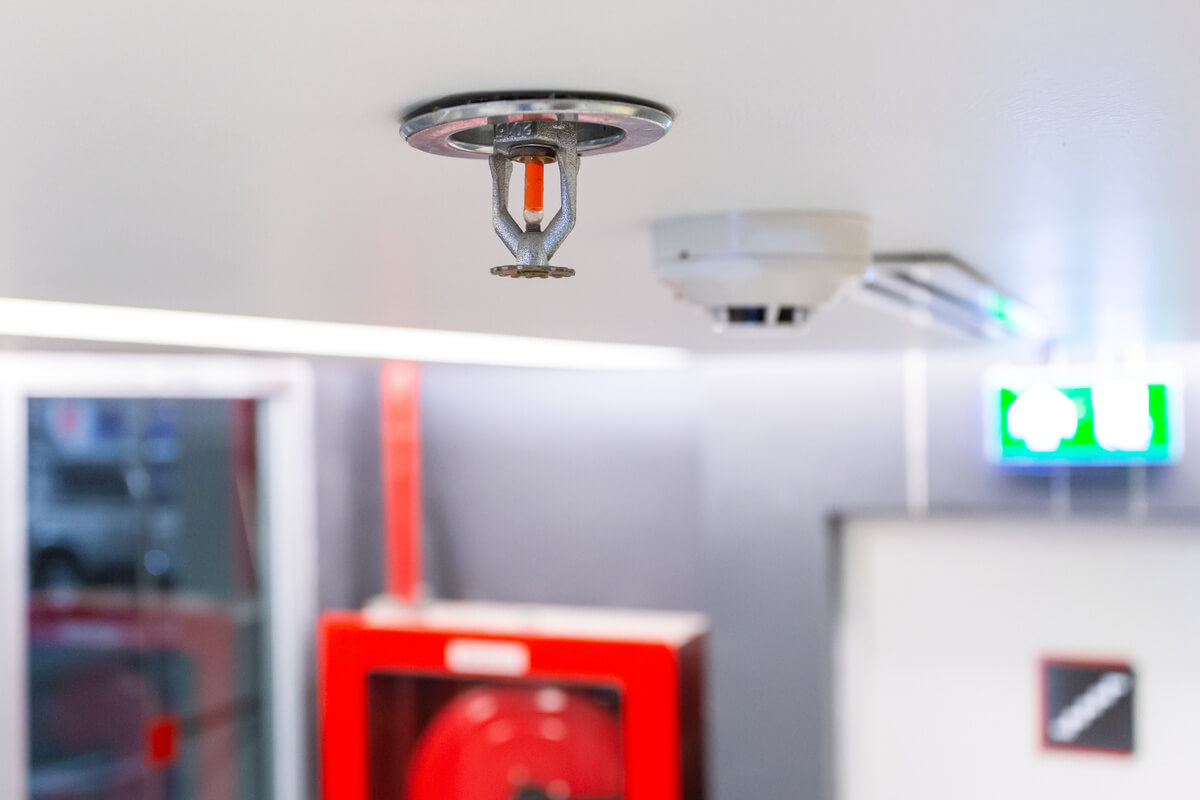
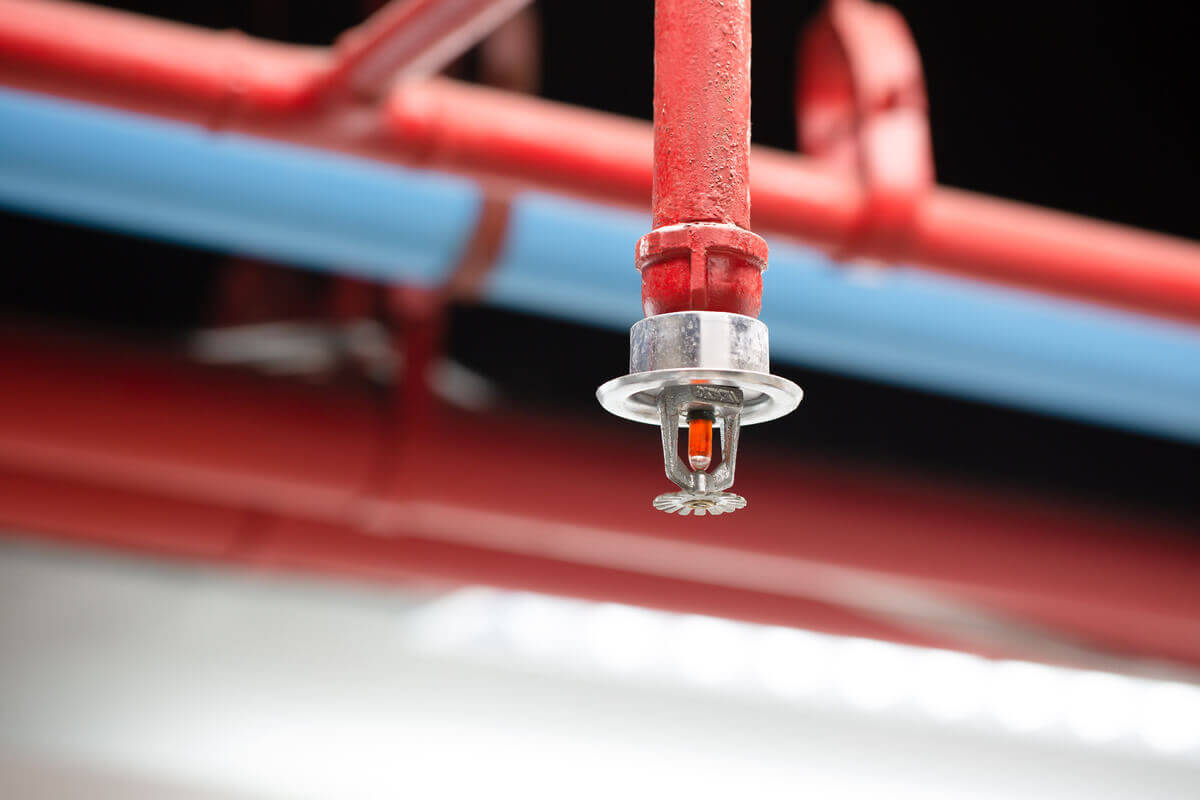
Figure 1: Exterior sprinkler systems apply water to roof assemblies and near-structure surfaces to reduce ignition susceptibility from wind-driven embers, particularly when integrated with fire-resistant construction and defensible space.
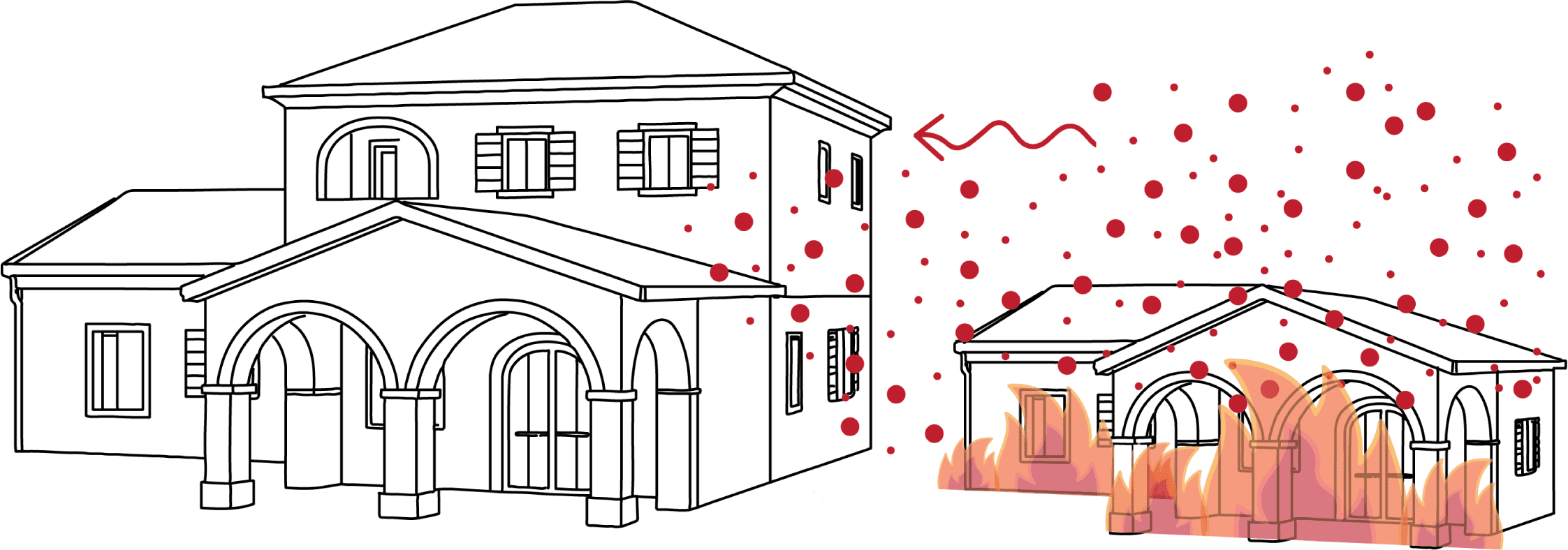
Wildfire exposure presents numerous risks to structures, including radiant heat, direct flame impingement, and airborne embers. Of these, ember exposure is the predominant mechanism by which homes ignite in wildfire events accounting for up to 90% of structure losses during these events. Wind-driven embers can travel significant distances ahead of the flame front, accumulate on roofs and around structural openings, and initiate ignition in combustible materials. A comprehensive wildfire mitigation strategy must account for ember behavior and focus on reducing a structure’s susceptibility to ember-borne ignition.
Exterior sprinkler systems are active mitigation solutions intended to reduce ignition potential in the immediate vicinity of a structure. While a complete strategy incorporates structural hardening and defensible space measures, exterior sprinkler systems can be an integral part of a successful wildfire risk mitigation plan. The following sections describe the risk posed by embers, describe the role of exterior sprinkler systems, and explain how they fit into a layered wildfire mitigation strategy.
Ember Dynamics and Structure Ignition
Wildfire embers, also referred to as firebrands, are small pieces of burning material lofted by convective currents and carried by wind. Because embers can travel ahead of the primary fire front, they expose structures to ignition conditions well before flames arrive. Ignition from embers occurs in several ways:
- Embers deposited on combustible roof surfaces or in gutters can smolder and transition to flaming combustion.
- Embers entering through vents, soffits, or other openings can ignite internal combustibles.
- Ember accumulation in corners, debris piles, or among combustible landscaping elements can lead to secondary ignition adjacent to the structure.
Figure 2: Wildfire exposure is driven by both radiant heat and wind-borne embers, with embers frequently igniting structures well ahead of the flame front by accumulating on combustible surfaces and entering vulnerable openings.
Exterior sprinkler systems are purpose-built to mitigate ember-driven ignition by altering thermal and moisture conditions within the structure’s ignition zone during periods of active firebrand exposure. Continuous or intermittent water application increases surface moisture on roofs, eaves, gutters, and adjacent ground fuels, reducing the likelihood that embers retain sufficient heat to initiate smoldering or flaming combustion. Experimental and post-fire analyses from IBHS identify ember exposure as the dominant ignition pathway in WUI losses and show that ignition probability is strongly influenced by the moisture state and combustibility of near-structure surfaces rather than flame front proximity.
At the building perimeter, sprinkler systems suppress ember-ignited spot fires in fine fuels and debris adjacent to the structure, which are a frequent precursor to sustained flame impingement on the building envelope. By interrupting this secondary ignition pathway, sprinkler systems reduce the transition from localized ignition to structural involvement. Their effectiveness is therefore governed by coverage of ember-receptive locations, water supply reliability, and operation during the ember exposure phase, not by total flow rate or fire suppression capability.
Exterior Sprinkler Systems: Purpose and Function
Mitigating ember-driven ignition requires water to be applied precisely where embers accumulate and long enough to prevent ignition during the exposure window. Exterior sprinkler systems are therefore configured to protect specific, high-risk surfaces rather than provide generalized wetting or fire suppression.
Typical system configurations include roof-level sprinklers addressing horizontal surfaces and roof edges, perimeter sprinklers targeting fine fuels and debris adjacent to the structure, and directed nozzles protecting architectural features with elevated ember accumulation potential. System effectiveness depends on continuous coverage of these ember-receptive locations; incomplete or poorly targeted coverage substantially reduces ignition resistance regardless of overall discharge.
Because this function depends on sustained water application, system performance is ultimately constrained by water supply capacity, pressure stability, and operational duration. These factors, rather than sprinkler quantity or nominal flow rate, determine whether an exterior sprinkler system provides meaningful ignition risk reduction.
Water Supply: Technical Considerations and Options
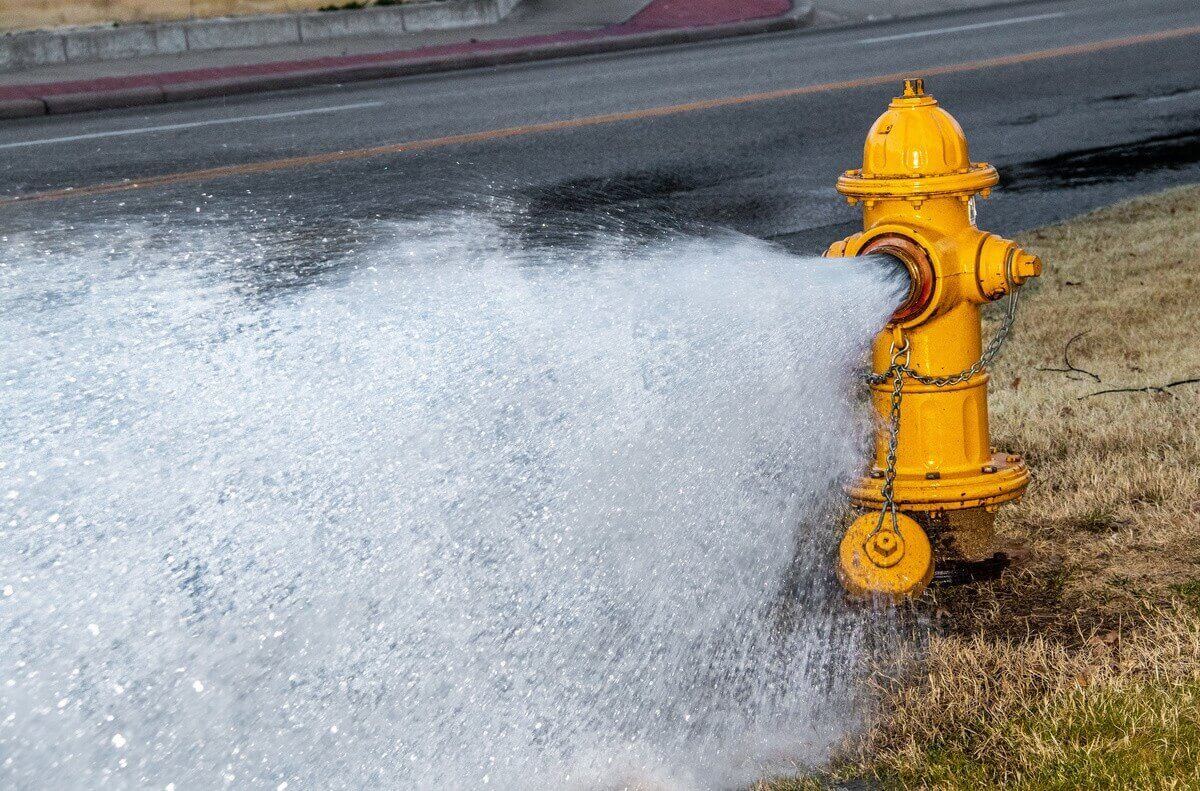
The performance of a sprinkler system is directly linked to the availability, pressure, and reliability of its water source. Wildfire events can stress municipal systems, and fire department operations can significantly reduce distribution pressures and flow capacity, impacting sprinkler performance.
Water supply options for exterior sprinkler systems generally include:
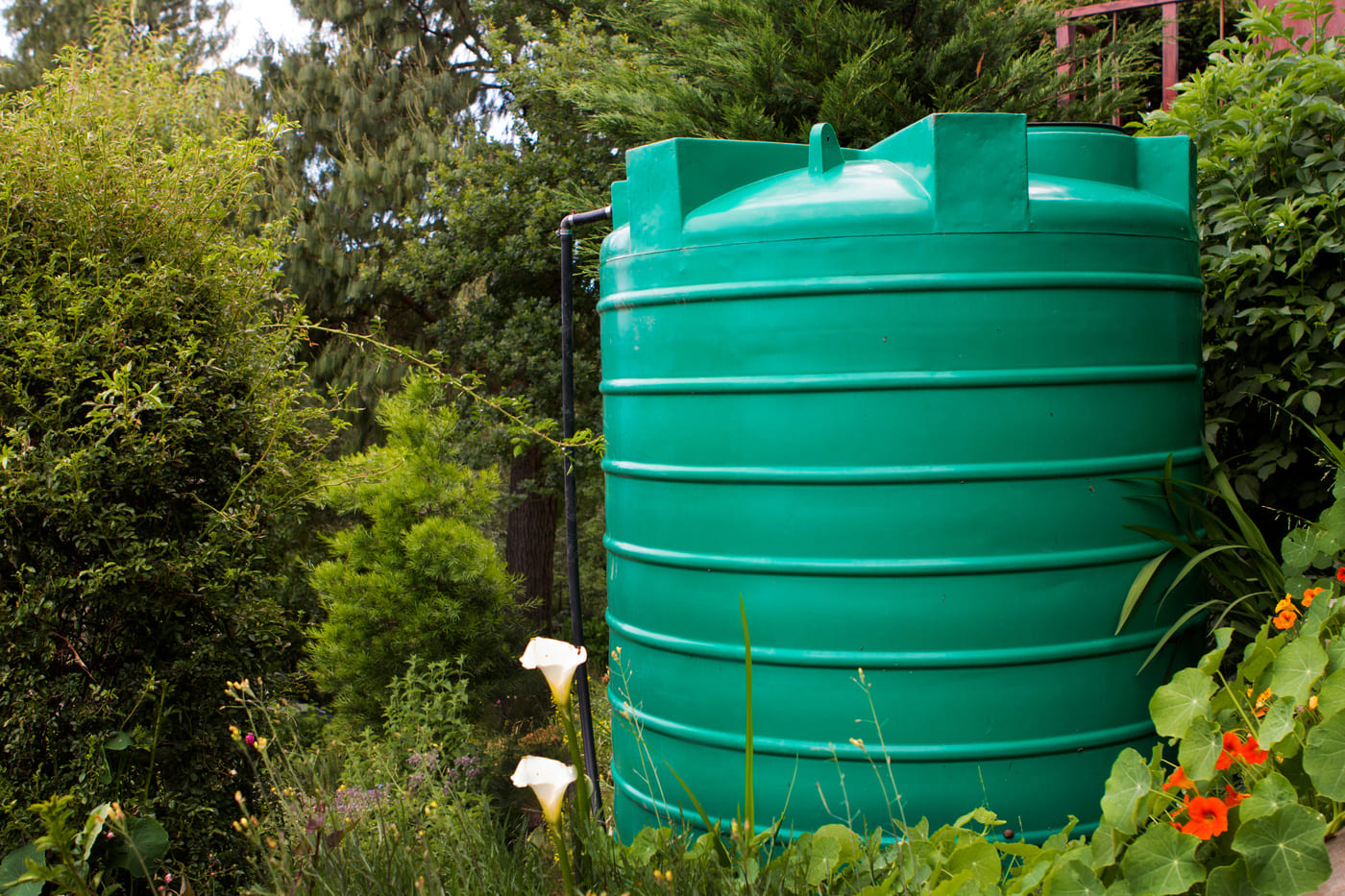
- Onsite Storage Tanks: Tanks provide a dedicated supply independent of municipal pressure. Common capacities range from 2,000 gallons to 5,000 gallons or more. When paired with a properly sized pump and controls, tanks can ensure a defined runtime during an event. For example, a 2,000-gallon tank could provide 1–2.5 hours of sustained operation depending on system configuration, while a 5,000-gallon tank could provide 2.5–6 hours.
- Pumps and Power Sources: System pumps must be capable of delivering required pressures and flows to all zones of the sprinkler system. Power options include grid power, onsite generators, or battery backup. The choice of power source must account for the likelihood of grid interruption during a wildfire incident.
Figure 3: Onsite water storage can improve the reliability of exterior sprinkler systems during wildfire events by providing a dedicated supply when municipal pressure is reduced or unavailable.
Findings from Research and Wildfire Deployments
Experimental and post-fire research consistently identifies wind-borne embers as the dominant cause of structure ignition in WUI wildfire events and shows that ignition probability is strongly influenced by surface moisture and near-structure fuel condition. Large-scale IBHS testing and field analysis demonstrate that exterior sprinkler systems can reduce ember-driven ignition when water is applied to ember-receptive surfaces during the exposure period, while also noting that effectiveness is sensitive to wind, evaporation, and infrastructure reliability.
Field experiments conducted under extreme fire behavior further validate this mechanism. FPInnovations wildfire test burns comparing sprinkler-protected and unprotected structures found that sprinkler-protected buildings experienced lower exterior surface temperatures and reduced damage, provided water application was maintained through peak ember and radiant heat exposure. These results reinforce that sustained delivery and targeted coverage, rather than short-duration pre-wetting or total flow rate, govern system performance.
Operational deployments documented across Canada show similar outcomes. FPInnovations case studies report successful structure protection where exterior sprinkler systems were supported by reliable water supplies, deployed prior to peak ember exposure, and focused on the structure ignition zone. Conversely, failures were most often linked to loss of water supply, inadequate runtime, or wind-distorted coverage, underscoring that exterior sprinkler systems function as an ignition-resistance measure rather than a fire suppression system.
For those evaluating exterior sprinkler systems as a wildfire mitigation measure, Engineered Fire Systems applies its engineering judgment grounded in wildfire exposure research, field performance, and site-specific risk assessment. Our approach focuses on designing systems that perform under true ember exposure conditions. Talk with our team to evaluate your property’s options and determine whether an exterior sprinkler system is an appropriate mitigation strategy.