A complete look at our fire protection engineering and design services—for contractors, architects, developers, and property owners.
Fire protection is not one-size-fits-all. The right solution for a pre-fabricated building looks nothing like the right solution for a high-rise, single-family home, or restaurant, and getting started on the wrong track can mean substantial delays and unanticipated costs. That’s why working with an experienced fire protection engineering firm from the start is critical.
Engineered Fire Systems has been providing fire protection design and engineering services since 1986. With offices in Grass Valley, California and Reno, Nevada, our team of NICET-Certified designers and licensed fire protection engineers handle projects ranging from basic residential sprinkler systems to the most complex special hazards work.
Our customers include architects, property owners, developers, and fire protection contractors, all of whom rely on us to deliver reliable, code-compliant solutions that keep projects moving and properties protected. Here’s a full look at what we offer.
Development Consulting and Advocacy
Engineered Fire Systems has a 40-year history of helping property owners and developers navigate fire protection compliance efficiently and cost-effectively. Our owner advocacy services are built around getting projects permitted and built without unnecessary roadblocks.
This service covers:
- Fire Protection Advocacy & Compliance: we understand your project’s unique needs and tailor solutions to streamline the process
- Fire & Building Department Coordination: we interface directly with fire and building departments to fast-track permitting and approvals
- Site Audits & Planning: early-stage audits addressing water supply availability, access and turnaround compliance, construction materials, proximity to fire hydrants, and fire department response times
- Wildfire Protection Consulting: structural hardening, defensible space planning, and exterior wetting systems for properties in fire-prone areas
- Engineering & Specifications: detailed engineering documents for fire sprinkler, alarm, and other fire protection systems, suitable for permitting and installation bidding
- Contractor Support & Oversight: assistance in hiring qualified contractors, reviewing their work, and resolving issues during the installation process
We can step in at any point in a project, but we provide the most value when involved from the early planning stages.
Fire Sprinkler System Design
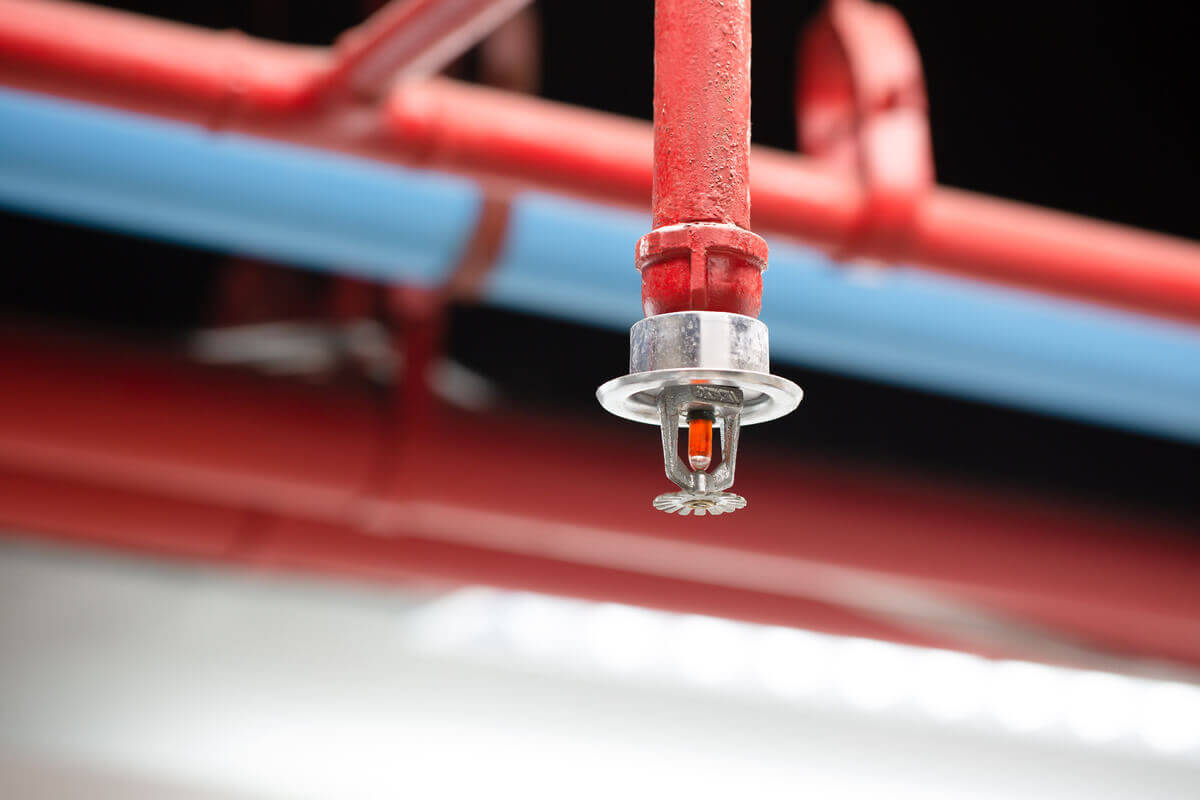
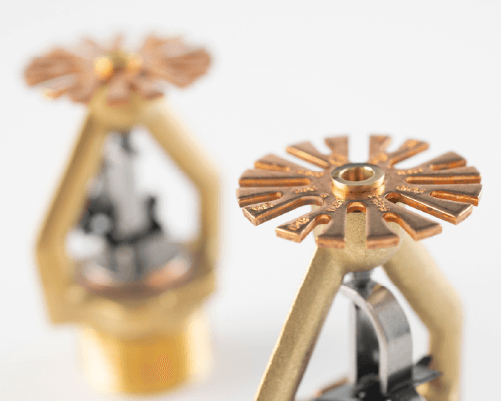
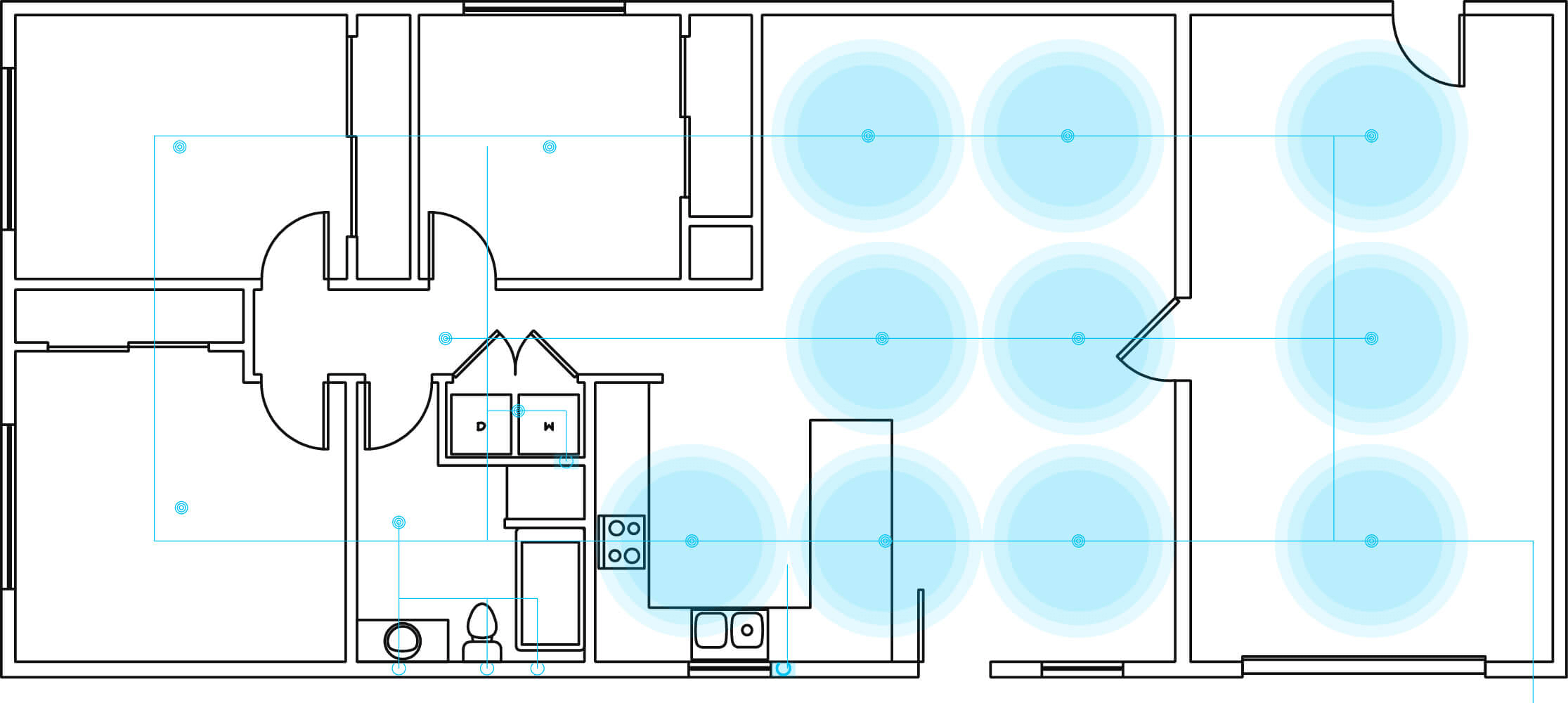
Fire sprinkler design is one of our core specialties. We engineer and design systems for all building types, from single-family homes to large apartment complexes and hotels, warehouses exceeding one million square feet, and high-rise buildings. We handle both new installations and retrofits.
The types of fire suppression systems we design include:
- Water-Based Systems: the most common type, appropriate for most residential, commercial, and industrial buildings
- Dry Systems: for unheated environments where water in the pipes could freeze, like warehouses and loading docks
- Preaction Systems: ideal for spaces with sensitive equipment or materials, such as data centers, museums, and libraries, where accidental discharge must be prevented
- Deluge Systems: for high-hazard environments like chemical plants and aircraft hangars that require large volumes of water delivered immediately
- Fire Pumps: for large buildings or facilities where the available water supply cannot provide adequate pressure
- Fire Water Tanks: for facilities where water supply is not adequate or reliable
- Foam Systems: for areas with high-risk flammable liquid hazards, such as fuel storage and industrial facilities
- Water Mist Systems: effective suppression with minimal water usage, suited for commercial kitchens, electrical rooms, and data centers
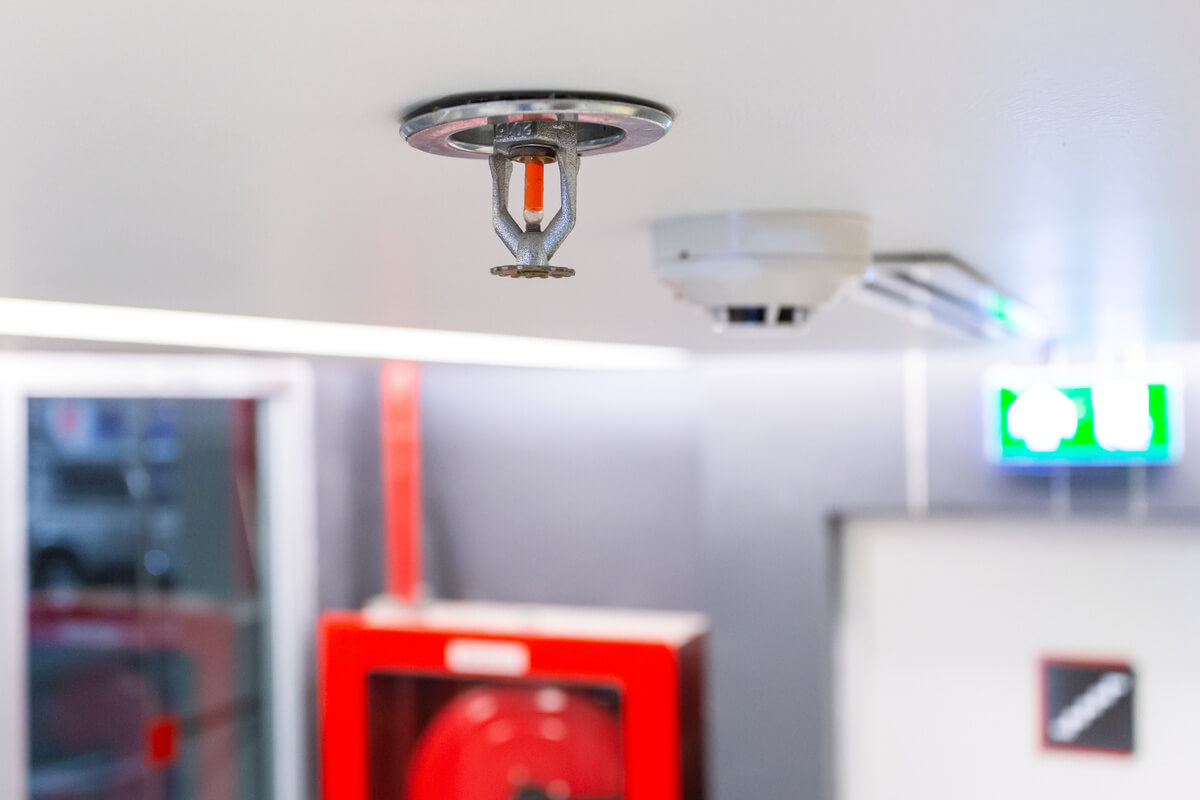
Working with Engineered Fire Systems on a sprinkler project means more than a set of drawings. Our team supports every project from initial concept through final construction, including project estimation, permit drawings, architectural coordination, shop drawings, material lists, and as-built updates.
Fire Alarm System Design
We also specialize in designing advanced fire alarm systems for residential and commercial properties. Our approach accounts for building layout, occupancy, and specific fire risks to ensure protection that’s both comprehensive and code-compliant.
Types of Fire Alarm and Emergency Communication Systems we design include:
- Standard initiation and notification fire alarm systems, either conventional or addressable
- Fire sprinkler monitoring
- Building interface systems – elevator recall, fire and smoke dampers, emergency lighting, critical system monitoring
- Voice evacuation systems
- Two-way communication systems
- Emergency responder communications enhancement systems
From permit drawings and architectural coordination to shop drawings and as-builts, our work covers the full project lifecycle, not just the design.
Inspection and Plan Review
Engineered Fire Systems offers third-party inspection and plan review services for private parties and for federal and local authorities having jurisdiction (AHJs). Our team includes fire protection engineers, civil engineers, sprinkler design technicians, fire alarm design technicians, life safety plan reviewers, and inspectors.
We provide review services for:
- Fire Sprinkler Systems
- Fire Alarm Systems
- Fire Pump Systems
- Kitchen Hood Protection Systems
- Special Hazard Systems
- Emergency Responder Radio Coverage Systems
- Clean Agent Fire Suppression Systems
- CO2 Fire Suppression Systems
All reviews ensure compliance with national, state, and city codes, from initial design through final approval. This service is available for plans designed by others, making it a practical option for peer review, independent verification, or jurisdictions that require a third-party stamp.
Exterior Suppression Systems
As wildfire risk grows across fire-prone regions, exterior suppression systems have become an additional layer of property protection. Over 90% of homes lost to wildfire ignite from windblown embers or radiant heat, not direct flame contact. Embers can travel more than a mile ahead of a fire front and ignite structures quickly when they land on vulnerable surfaces.
Engineered Fire Systems designs custom exterior suppression systems to address this threat. We offer three types of exterior system configurations:
- Building Envelope Protection Systems
- Roof Protection Systems
- Landscape Perimeter Protection Systems
Systems can be activated manually on-site, remotely through an internet-connected interface, or automatically. Most existing properties can be retrofitted with an exterior system. From initial consultation to final testing, most installations are completed in about four months. Our Reno office serves clients across Northern Nevada and the surrounding region, where wildfire preparedness is increasingly relevant.
Consulting and Design
Sometimes a project needs expert fire protection input before formal design begins, or alongside another engineer’s work. Our consulting and design services are built to be flexible and fill whatever gaps a project has.
Services include:
- Civil and Fire Protection Engineer Services: licensed engineers providing guidance on system design, installation, and compliance with local fire codes
- Building Surveys: detailed assessments of fire protection needs and existing system performance for both new construction and renovation projects
- Design-Build Assistance: close collaboration with architects, contractors, and developers to integrate fire protection seamlessly into the project
- Density Upgrades: adjusting sprinkler system water flow and pressure to meet heightened safety requirements in high-risk or high-occupancy environments
- Hazard Analysis: comprehensive assessment of the specific fire risks present in a facility, used to design suppression systems precisely tailored to those risks
- Water Supply Analysis: verifying that water pressure and flow meet the requirements for a project’s fire protection systems, whether from municipal supply or on-site sources
- Cost and Time-Saving Design Approaches: value engineering to maximize efficiency without compromising safety or compliance
Stocklists and Procurement
Material sourcing is one of the parts of a fire protection project that can quietly derail a timeline. Engineered Fire Systems helps contractors stay ahead of that with dedicated procurement support:
- Material Stocklists: comprehensive, project-specific inventories of all necessary fire protection materials to keep procurement on track
- Material Specifications: detailed specs ensuring every component meets required safety standards and local regulations
- Material Estimation: precise cost estimating for all components and contingencies, based on decades of industry experience
- Material Data Submittals: complete documentation including product data sheets, certifications, and compliance paperwork for authority approval
FAQs
The earlier the better. Getting fire protection involved during the early planning stages allows the systems to be integrated seamlessly into the overall project plan and prevents the kind of costly redesigns that happen when it's treated as an afterthought. That said, Engineered Fire Systems can support a project at any stage.
Requirements vary depending on local building codes, property type, and occupancy size. Many commercial buildings and high-occupancy structures are required to have fire sprinklers. Residential requirements depend on regional codes, though many new homes are now being built with systems for added safety. The ultimate determination will be the local regulations for the specific project.
Yes. Retrofitting an existing property can be more involved than a new installation, but it's entirely achievable and often the right call for enhancing protection in older structures. Engineered Fire Systems handles retrofits for all building types alongside new construction work.
Most commercial buildings require a fire alarm system under local building codes. Multi-family residential buildings such as apartments and condos typically require them as well. Other occupancy types that commonly require fire alarm systems include schools, healthcare facilities, high-rise buildings, hotels, assembly occupancies like theaters and convention centers, and industrial facilities with hazardous materials. Any moderately sized building with an NFPA 13 fire sprinkler systems will require, at minimum, a fire sprinkler monitoring system. Local codes and insurance requirements can also mandate systems in additional building types.
Yes, and this is one of the most valuable parts of our Development Consulting and Advocacy service. We interface directly with fire and building departments on behalf of our clients to fast-track permitting and approvals, keeping projects moving while other work gets done.
Ready to Talk Through Your Project?
Whether you’re in the early planning stages or need fire protection support on an active build, the Engineered Fire Systems team is ready to help. We have offices in Grass Valley, California and Reno, Nevada, and work on projects across the country and internationally.